
When do you need a Traffic Guidance Scheme (TGS) in NSW?
Plain-English explainer on what a TGS is, how it differs from a TMP, and the common NSW scenarios that trigger the requirement. AS 1742.3 basics without the jargon.
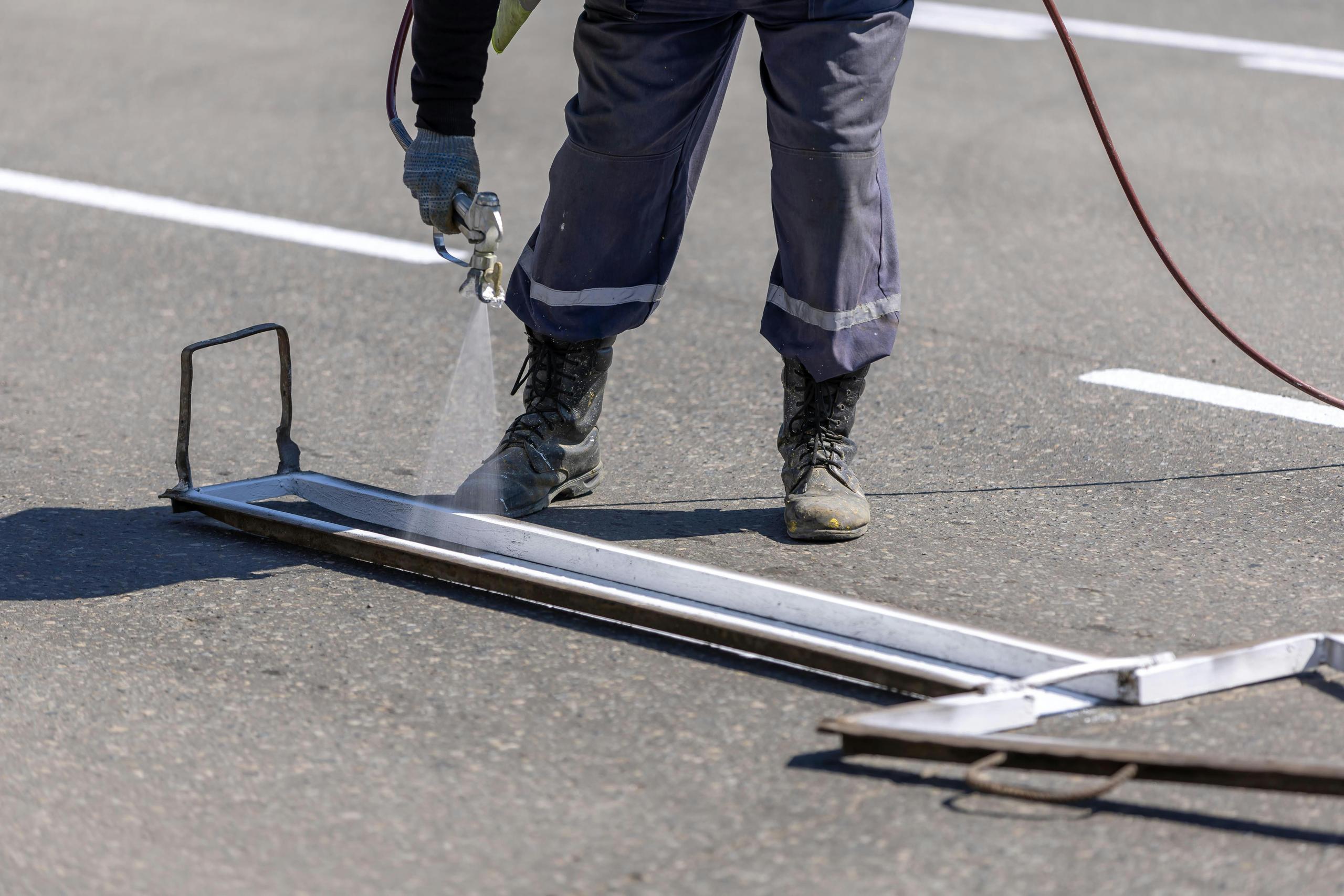
Two letters that cause more confusion on NSW worksites than almost any others: TGS. Site supervisors reach for them on the wrong jobs, skip them on the right ones, and ask us for "the TGS" when they mean the TMP. This guide sorts it out.
What a TGS actually is
A Traffic Guidance Scheme is a scaled, annotated drawing of your worksite showing exactly how traffic — cars, trucks, bikes, pedestrians — will be guided safely past your work. It shows:
- Advance warning signs and their spacing (calculated from road speed limit)
- Taper lengths for lane shifts or closures
- Buffer zones between workers and live traffic
- Sign sizes and reflectivity class
- Cone/bollard positioning and spacing
- Pedestrian management (temporary footpaths, audio-tactile tiles, ramps)
- Emergency access points
It's the drawing that the controller on the ground uses to build the site. Without one, you’re improvising with a truckload of cones — and that’s how incidents happen.
The legislative basis
TGSs in NSW are built against AS 1742.3:2019 (Manual of Uniform Traffic Control Devices — Part 3), supplemented by:
- TfNSW Traffic Control at Worksites Technical Manual — mandatory on TfNSW-managed roads
- Local council instructions — some councils (particularly City of Sydney, Parramatta, Randwick) have supplements
- SafeWork NSW codes of practice — for worker exposure and fatigue
Every sign, cone and taper shown on a TGS should map back to one of these — that’s what separates a compliant scheme from a nice-looking PDF.
TGS vs TMP — the difference that keeps getting muddled
A TMP is the strategy. A TGS is the site drawing. Most meaningful jobs need both; some jobs just need a TGS.
Think of it like building a house: the TMP is the development application and engineering package. The TGS is the set of construction drawings your crew actually works from.
A TGS without a TMP is legal for low-complexity jobs where an off-the-shelf scheme exists and conditions match. A TMP without a TGS is, essentially, never — the drawings are how you operationalise the plan.
When you need a TGS (and probably nothing more)
You can often proceed with a TGS alone (referencing a generic TMP or a council’s standing instructions) when all of the following are true:
- Work is on a non-classified local road under council control
- Posted speed limit is 50–60km/h
- Works are short duration (under a day, or 2–3 days with consistent setup)
- Works are low-risk: driveway crossings, kerb-and-gutter maintenance, small utility pit work, shallow trenching on the verge
- No impact on intersections, bus routes, cycleways or pedestrian generators (schools, hospitals)
- No detour required — traffic passes through on a shoulder or single-lane shuttle
Even then, the TGS must be prepared by someone with the right TfNSW accreditation and signed off by a qualified person on site before work begins.
When you need both a TMP and a TGS
Most NSW works fall here. You need a full TMP — and then one or more TGSs attached to it — when any of these apply:
- Any work on a classified (TfNSW-managed) road — motorways, state highways, regional roads
- Lane closure on a two-lane carriageway beyond a short shuttle
- Night work under any classification
- Work in or adjacent to an intersection, especially signalised ones
- Work affecting bus routes, taxi ranks, emergency-service corridors
- CBD and activity centre works — City of Sydney, Parramatta, Newcastle CBD
- Multi-stage projects where the setup changes day to day
- Any special event — road closures, route parades, festival ingress/egress
- Detour required — even a short one
Common NSW scenarios, mapped
Here’s how we’d classify the ten most common jobs that come across our desk:
- Water main repair, quiet residential cul-de-sac → TGS only, council generic TMP reference.
- NBN pit lid replacement on 50km/h local road → TGS only.
- Hot water service removal, commercial strip shops → TGS only with pedestrian management detail.
- Footpath renewal, suburban shopping strip with bus stop → TGS + light TMP.
- Telstra pit work on a 70km/h arterial (non-classified) → TGS + TMP.
- Line marking renewal, TfNSW classified road → Full TMP + ROL + TGS.
- Crane lift over an arterial intersection → Full TMP, traffic management centre engagement, VMS schedule, TGSs per stage.
- Overnight pavement rehabilitation, motorway shoulder → Full TMP, ROL via TfNSW OPLINC, lighting plan, multiple TGSs.
- Community festival road closure → Event TMP, council’s event traffic plan, multiple TGSs (setup/live/bump-out).
- School zone pedestrian bridge construction → Full TMP, police sign-off, school consultation, TGSs per shift.
Why it matters beyond paperwork
A good TGS is a worker-safety document before it’s anything else. The buffer zone on your scheme is what stops a distracted driver from hitting your team. The taper length is what gives drivers time to react. The sign spacing is what gives them the information. Every one of those values is calculated from the posted speed — not copied from the last job.
When auditors, insurers, or (worst case) a coroner look at a worksite after an incident, the first thing they pull is the TGS. It should match what was actually on site, to the metre. That’s why we photograph setup for every TGS we deploy — the paper has to reflect reality.
Getting a TGS done right
Practical tips if you’re briefing a contractor:
- Send a Google Maps pin, a photo, and the posted speed limit. That’s 80% of what a designer needs to start.
- Tell them the planned shift pattern (day, night, both).
- Be honest about stakeholder constraints — a bus route you forgot to mention is the difference between a 2-day turnaround and a 2-week one.
- Ask for the scheme rationale alongside the drawing. A good TGS designer explains why the taper is 60m, not just that it is.
- Keep a copy on site, in physical form. When your supervisor gets a visit from WHS or council, they need to produce it.
Wrap-up
A TGS isn’t a formality — it’s the document that makes the difference between a safe worksite and a chaotic one. For local council jobs on quiet roads, a standalone TGS may be all you need. For anything on the TfNSW network, anything overnight, or anything with a detour, plan for a full TMP with TGSs attached.
If you’re not sure which bucket your job sits in, send us the site pin and we’ll tell you on the phone — usually in under five minutes.
Keep reading

How much does a Traffic Management Plan (TMP) cost in NSW?
A plain-English breakdown of TMP costs in NSW — fee tiers by road classification, the factors that push prices up, and how to avoid getting stung on complex jobs.

Choosing a traffic control contractor in Sydney: a buyer’s guide
Red flags to avoid, questions to ask, accreditations to verify, and what a fair pricing structure looks like. Everything a project manager needs before signing a traffic control contractor in Sydney.

Traffic control for special events: a NSW planning checklist
A practical, council-aware checklist for event organisers planning traffic control in NSW. Covers police sign-off, VMP vs TMP, peak-hour considerations, pedestrian flows and more.